 Union Post UK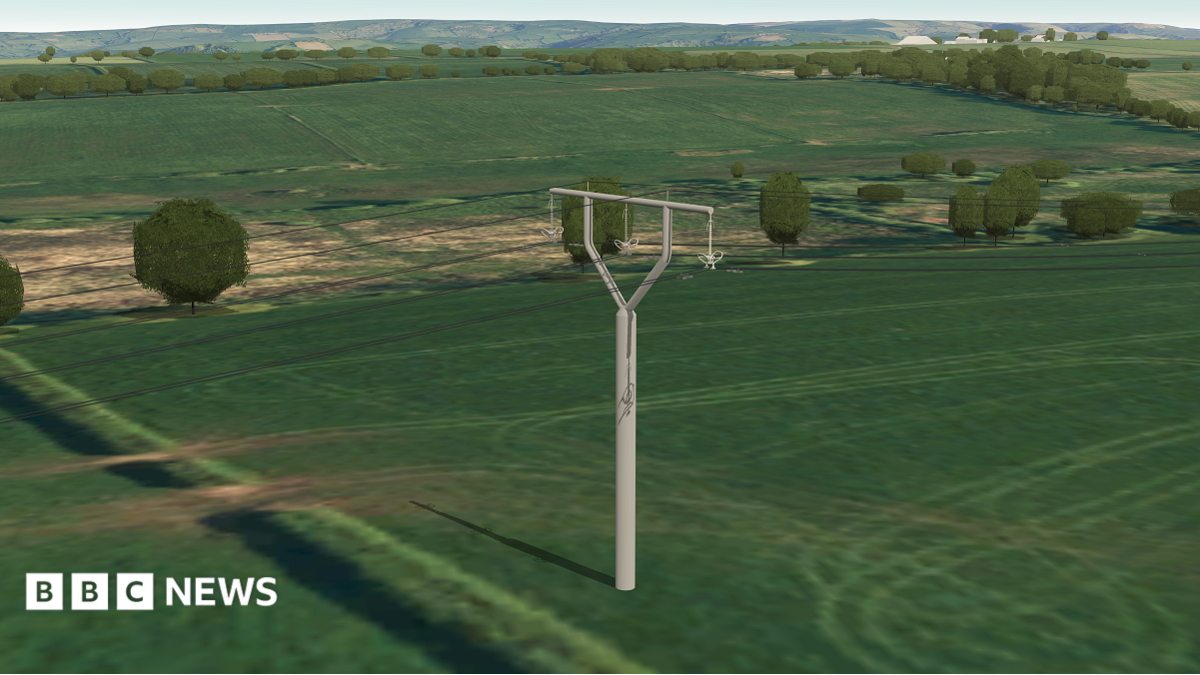
Image source, Bystrup/3DW/Green GEN Cymru Image caption, A computer simulated image of what Green Gen Cymru's new pylon could look like By Steffan Messenger Wales environment correspondent An energy firm facing backlash over plans for new power lines has unveiled what it has described as a "slim and compact" pylon, designed "with the Welsh landscape in mind". Green Gen Cymru said the 22m (72ft) high single-pole structure was considerably shorter than traditional steel pylons, with the aim of "limiting visual impact". The firm's design has been commissioned for use on two of its three planned routes for upgrading the electricity grid across mid and west Wales.
The Campaign for the Protection of Rural Wales said it was "still a major piece of infrastructure in the countryside". Image source, Green GEN Cymru Image caption, A Green Gen Cymru graphic showing their proposed pylon routes Green Gen's proposals have previously sparked protests and legal action , as well as a pledge from the Plaid Cymru-led Welsh government to prohibit the use of large-scale steel pylons. The company said its new pylon had been inspired by "monopole designs commonly used across Europe".
"Monopoles are single-pole structures designed to carry significant electricity network capacity within a slim and compact profile," it explained. The company had previously proposed using 27m tall steel pylons, whereas this new design would be nearer 22m. Wooden-pole alternatives are around 12m high but can carry less electricity.
Using monopoles rather than wooden ones would mean fewer overhead lines are needed, the company said, reducing impacts on farmland and scenery. They have argued that relying solely on putting cables underground is prohibitively expensive and disruptive. The new monopoles will be used on the firm's Towy Usk , external and Towy Teifi , external projects - as part of a "toolkit" which also includes wood poles, underground cables and traditional pylons.
A prototype is expected to be ready to be installed in early 2027 for communities to see. Image caption, Georgia Rollison can already see a pylon from her bedroom window The firm has issued computer-simulated images of what its new pylons could look like. BBC News asked passers-by in Carmarthen what they made of the design.
Georgia Rollinson, 27, said she had a pylon outside her bedroom window and thought these looked "a little bit better". "I think I'd prefer that to one of the others. It might blend in better," she said.
"If people want to live in the modern world with the television and internet then they have to have some sacrifices somewhere - even if it is a pylon in the middle of a field." Anthony Read, 69, said: "They certainly do look smaller and better but ideally put them underground if you can." He claimed: "It's all down to cost but if something's hidden it's better for the environment." Image source, Bystrup/3DW/Green GEN Cymru Image caption, Four of the structures would be required per kilometre Phillip Richardson, 78, asked: "Why spend money replacing [pylons] with something that's only marginally better? "I can't see them being better for the environment - it's a waste of money and could be better spent." Robin Daniels, 58, said they looked "a lot better than the traditional ones you see across the landscape". "We've got to decarbonise and the electricity's got to move somehow," he added.
"Burying the cables is expensive so if this is an alternative to make it a bit less of an eyesore, it's probably a good idea." Image caption, Phillip Richardson felt it was a waste of time and money to come up with a new pylon design Green Gen hopes to build three major powerline routes connecting onshore windfarms planned by its sister company Bute Energy with the wider grid network. It says it will invest nearly £1bn by 2030, with proposals affecting parts of Carmarthenshire, Ceredigion, Powys and Shropshire. But it has faced considerable backlash in certain communities, with groups representing hundreds of landowners recently taking the company to court .
Plaid Cymru also campaigned against pylons ahead of winning May's Senedd election, promising in its manifesto to have "a clear presumption in favour of undergrounding" new power lines. "Overhead alternatives" would only be allowed "where installation is via low wooden poles or equivalent, less intrusive infrastructure". Image caption, Green Gen Cymru's plans have faced considerable backlash in some communities Dr Jonathan Dean, from the Campaign for the Protection of Rural Wales, said the new design would not be enough to placate opponents of the firm's plans.
"It is still a major piece of infrastructure in the countryside," he argued, while separate proposals for new transmission lines under consideration by the National Energy System Operator (NESO) could render Green Gen's plans "utterly redundant". Farmer Dyfan Walters, who lives near one of the company's proposed pylon paths on the outskirts of Llandovery in Carmarthenshire, said "undergrounding is the only option that we would consider and that is very much aligned to the Plaid Cymru policy". While the new pylons would still be unacceptable to many, he said the fact the company had been forced to change its original plans should be viewed as "a win for the community".
Image source, Green Gen Cymru Image caption, Guto Davies of Green Gen Cymru said the announcement was an exciting moment for the company Guto Davies, head of external affairs at Green Gen Cymru, said a range of factors had led the firm to look for an alternative pylon design including "engineering and environmental implications, the community feedback and of course the political landscape in which we're operating". "We've tried to test ourselves to find an innovative approach" that would help "deliver for Wales' economic, productivity and decarbonisation ambitions whilst also making sure we build around the needs of the communities that are hosting this infrastructure". Stephen Rowlands, the company's head of construction and supply chain said there was "a real opportunity for Welsh industry to play a leading role" in developing and delivering the new pylons.
"As we take the monopole forward, we want to harness the skills, expertise and manufacturing capability that exists here in Wales," he said. The Welsh government said it would be "inappropriate to comment on specific planning proposals due to the role of Welsh ministers in the process". "We are developing a National Energy Strategy so Wales can meet its energy demand sustainably and with more benefit to the people and communities of Wales." Additional reporting by Sara Rowlands.
Source: BBC